

About

ABOUT UNIXPLORIA


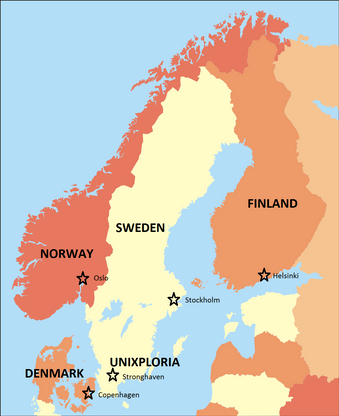
The Kingdom of Unixploria is a sovereign state within the borders of southern Sweden, with territories in other parts of the world, and beyond.


Our journey began with a playful idea of building a nation, a common interest shared by many micronationalists. As we progressed, we established a functional administration for our country.

Map of Scandinavia

As nation-builders, we often wonder why we enjoy designing flags, composing national anthems, and establishing governmental systems. It does not mean we've rejected our old countries. We could not have established this nation unless we were lucky enough to live in a part of the world where fundamental freedom still reigns. Sweden will always be our "home country," and nothing can change that. However, we have created our realm, our nation, within a nation, without ever taking up arms or raising our voices. The two kingdoms of Sweden and Unixploria live in happy coexistence.  


In a way, we all build nations to make things better. We build countries that we wish would exist. Besides, there is no real difference in quantity between macronation and micronation. If we were 300 million people united under one flag, we could undoubtedly claim independence and form a country, so why not do it even if you're just 10, 5, or 1 individual?


Why Start a New Country?

You might be inclined to ask: Why start your own country? Our intentions and rewards have been centered around the freedom to build a state where my family's values, traditions, and history could become their own. We did not feel that our macro nations offered this, so we declared our independence.


As for royal lineage, one could argue that all the world's royal families are considered royal because somebody decided to bestow that title upon them. Maybe it was due to historical circumstances, heroism, or even pure coincidence.


We don't try to hide that we are not of royal bloodline, but we are royals in our domain; we are royals in the State of Unixploria. We are, in fact, in the State of Unixploria. The name "kingdom" can, of course, also be applied to neutral statements such as "the Kingdom of Dreams" or "we live in a Kingdom on Earth." Unixplorians live in the Kingdom of Unixploria, and the royal family has added a touch of regal eccentricity to our great nation.


The Kingdom of Unixploria is a vision that no earthly nation has yet achieved. We are humbled to be that beacon in a world lacking inspiration and ideas. Just as the elected kings and queens of ancient petty kingdoms are now lost to history, we still believe that what constitutes a great king or queen is not just a matter of blood heritage. It is a legacy of individual honor and blood and an ethical compass pointing to good deeds.


A micronation certainly has support from various conventions, i.g The Montevideo Convention states that to form your sovereign nation, you must have the following:


1. a permanent population

2. a defined territory

3. a government

4. a capacity to enter into relations with other states. Alternatively, our future country, with a functioning polity, government, and political cabinets


Furthermore, the first sentence of Article 3 explicitly states that "The political existence of the state is independent of recognition by the other states." (The Montevideo Convention, 1933). According to this, we can safely claim to be a sovereign nation.


Unixploria is the Kingdom of Dreams

Micronationalism comes in many shapes and forms. Some nations are very serious about appearing like any macronational country, and others start their micronations out of curiosity or as a creative project. Unixploria results from everything mentioned, but this nation is about keeping dreams alive above all else.


We've read several thoughts on various micronational sites arguing about the number of worldwide micronations. We've never understood their debate. 900, 1000, or even 10,000 micronations might seem excessive, but is there a list of all the real micronations for us to browse? In all honesty, aren't we all just playing games here?


Sure, some put more effort into their micronational projects than others, but as far as we know, we are all rulers of unrecognized countries. We don't intend to ridicule or offend anyone; we state the obvious. We love micronationalism because it offers new viewpoints and diversity to societal life in our global village.


Of course, we can argue that we run a country just like any other. However, that would be an exaggeration since very few outside our micronational sphere have heard of our empires, kingdoms, and republics. That being said, there's nothing wrong with building countries you wish existed in reality, but creating a recognized nation with all the trimmings would require more than just a website and a flag.


We think of the Kingdom of Unixploria more like a project, a family within a nation without natural powers outside our realm. Our surrounding macronation (Sweden) could invade us whenever they please; we would be defenseless. They could even take parts of our land and do so with support from their legislation. We could argue that they're violating the Codex Unixploria, but it would not hold up in court.


As long as we behave, we can do as we please. There isn't a single micronation in the world that can claim actual sovereignty. There are many separatist movements in the world; some even form nations, but none of them started by saying, "We are a micronation." We're not picking on anyone who wants to split from their macronation. We're just saying that if you are set on creating a particular country, you'd better prepare for complex challenges shortly.


As micronationalists, we contribute somewhat to that divide, albeit out of self-preservation. The latter is also our paramount concern regarding micronationalism. In our darkest moments, we ask ourselves, "Is it worth it all?" Do we need more separatism when our macronations are torn apart by ethnic and religious tensions? Are we contributing to the demise of countries and supporting mass anarchy?
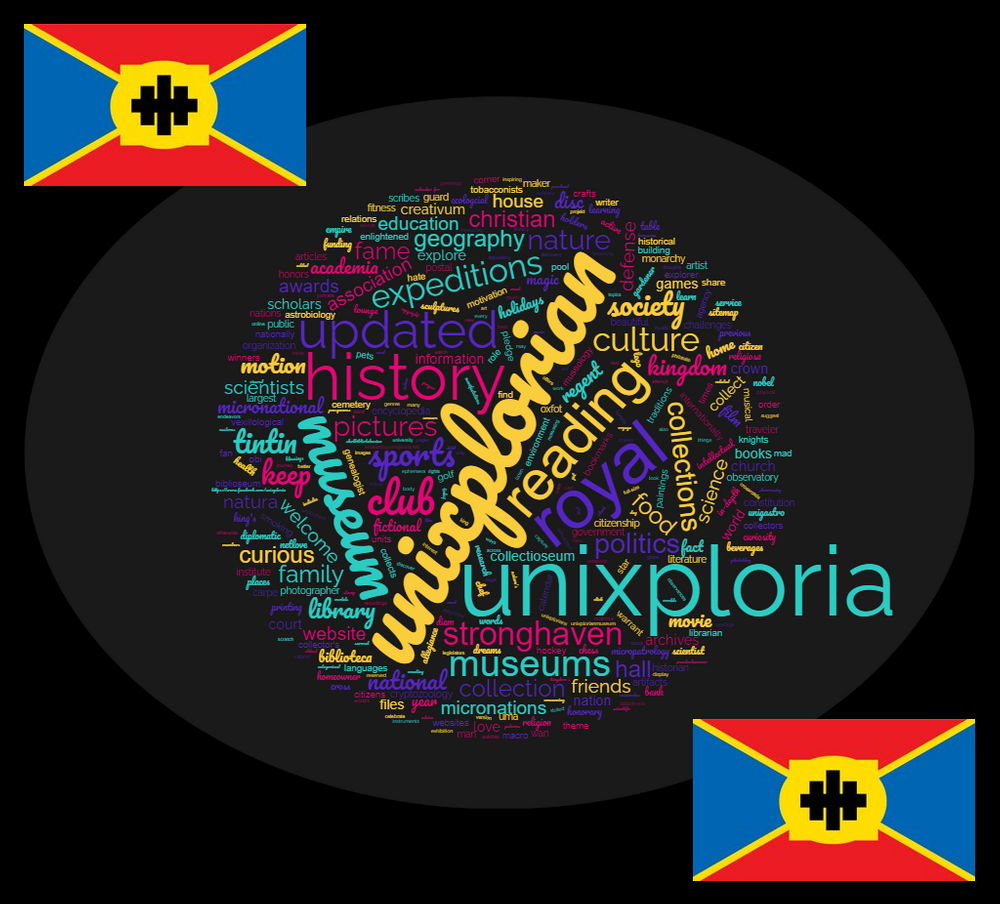
Wordcloud
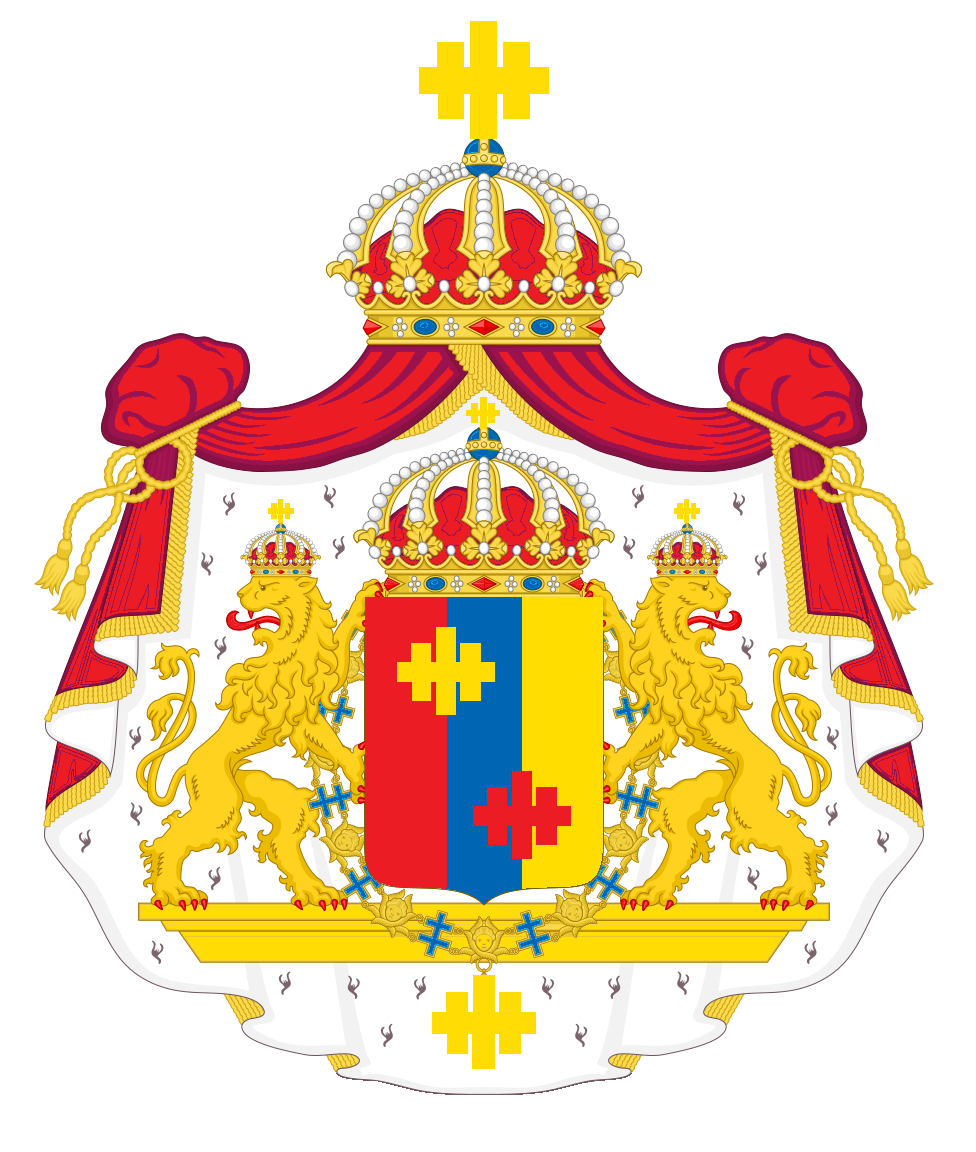
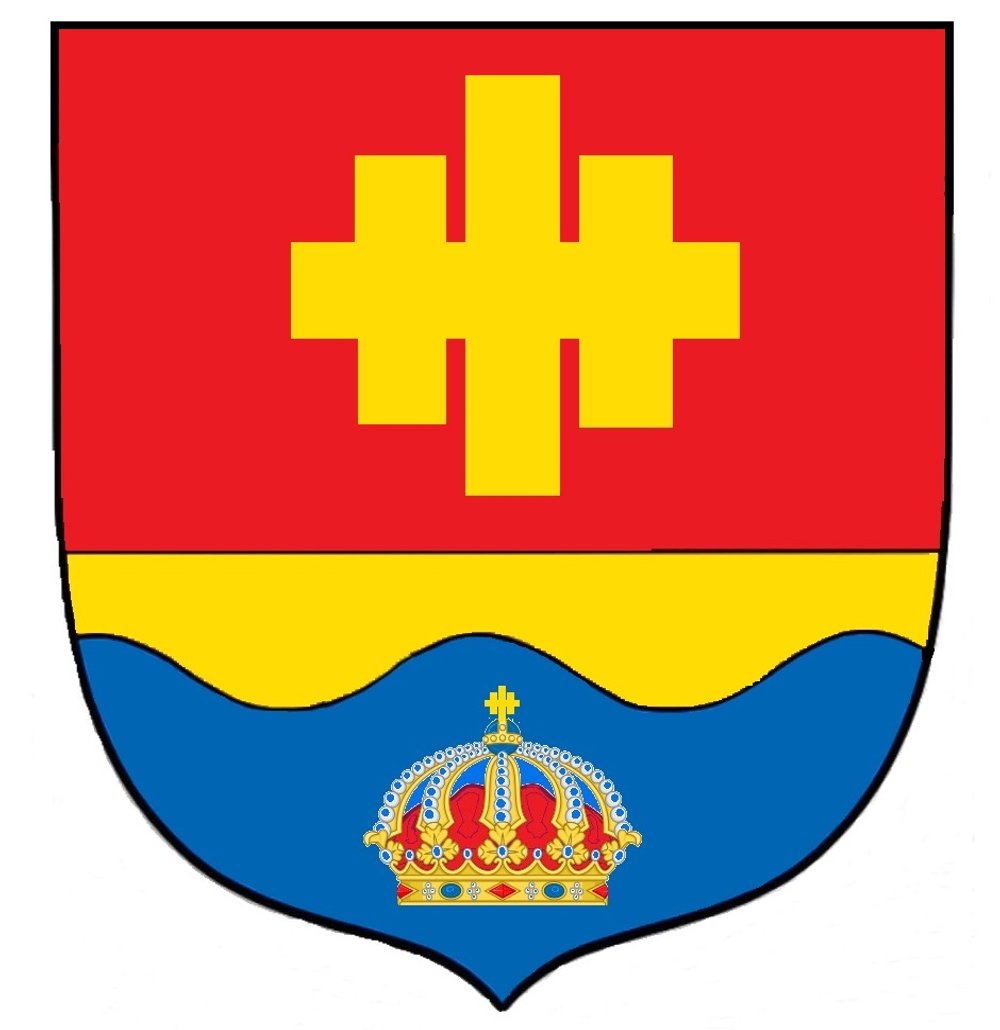
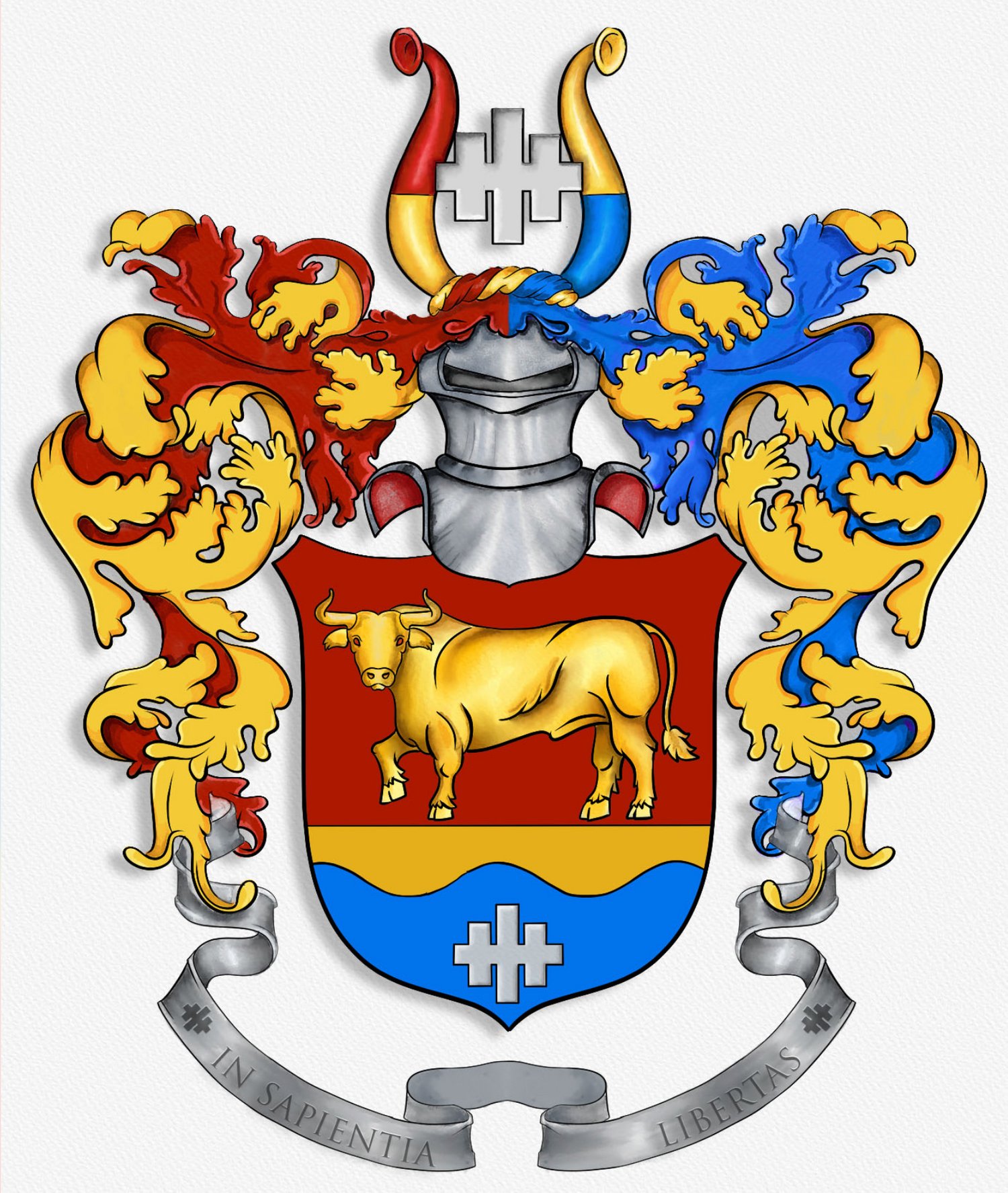
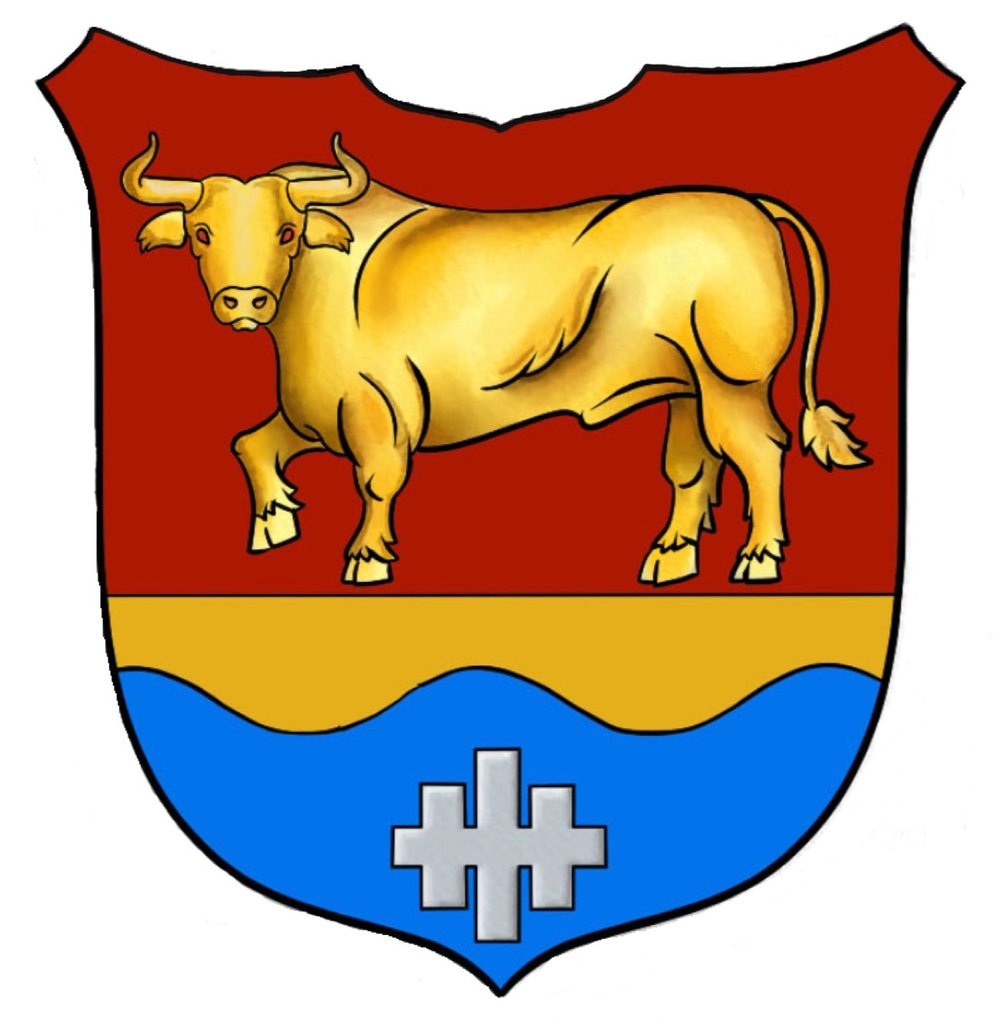
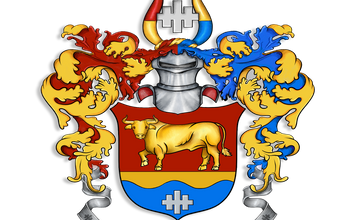
The Royal Coat of Arms of Unixploria
Government of Unixploria
Church of Unixploria
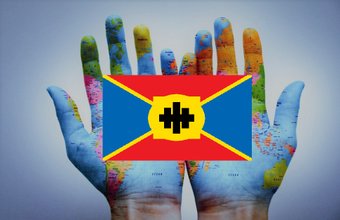
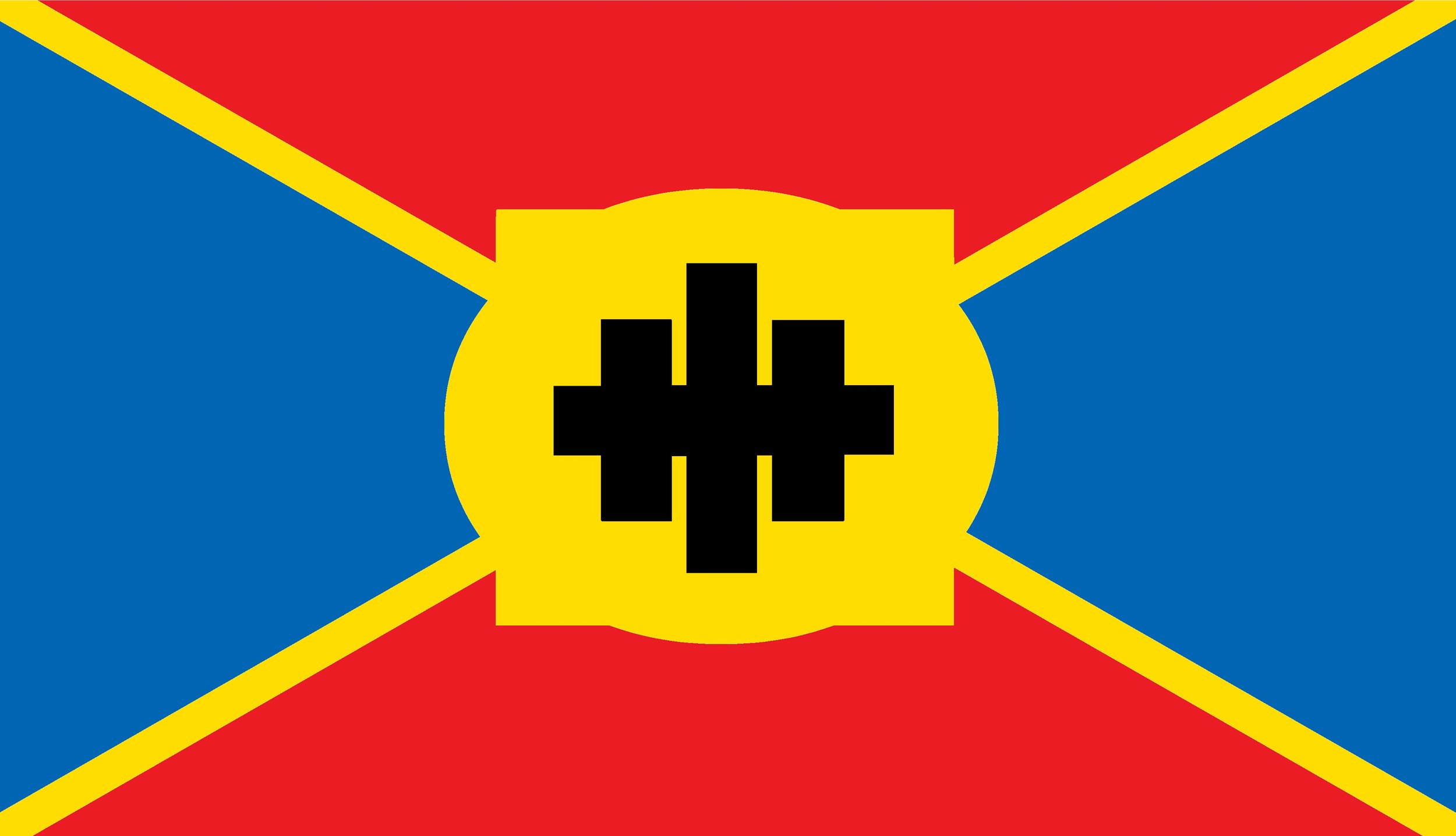
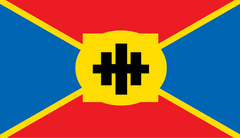
The national falg of Unixploria held by a map of the world.

The Royal Court

The Royal Court is of great importance to our kingdom. The Royal Family are promoters and good role models for Unixplorian culture, but they also play an important role in political life.

The Government

King Leif I is the leader of the government of Unixploria. The work in the government is divided into six cabinets. Each cabinet is led by a Cabinet Minister, who reports directly to the king.

The Church of Unixploria

The Church of Unixploria is a Christian church founded upon the Four Marks of the church, which were first expressed in the Nicene Creed: Unity, Holiness, Catholicity, and Apostolicity.

Our Culture

We are a nation of explorers and collectors. What do we mean by that? First of all, we explore the world to understand it better, and we collect artefacts to organize the world according to our minds and hearts.

PERFECT NOSTALGIA


There is no such thing as a perfect country or an ideal place. We were born in a country. That country is no more. Our parents were born in another country. That country is no more. So, we founded our own country, longing for a place to call home. Guess what? Home never changed into something unfamiliar. Home is where we are. It results from all our imagined dreams where heroes are still heroes, and a kiss has no Judas to stain a perfect picture of love.


We live a content life but still long for other sights and times. Nostalgia is a beautiful thing. Every wish is granted; every picture, scent, and color is vivid and real, perhaps more so than the strange world we keep hearing about in media.


We all long for emotions, countries, ideas, and places rooted in our nostalgic visions: England during the late 1800s, da Vinci’s Florence, or Sweden during the Viking era. Those places and times appeal to us but are no longer and perhaps never were. People must have had the same nostalgia back then, longing for places long gone. They are still alive, however. They live in us, creating a defined yet spaceless frame to evaluate our lives. Our ancestors speak to us, explaining what course to take.


We live in the best times, country, and physical surroundings, feeling more content than anyone can imagine. We live a productive life in a clearly defined realm, but still no more. We live in Unixploria, our old kingdom, where the echoes from millennia of nostalgia known as the days of yore speak to us and tell us to be patient. They say the best is yet to come, and we believe them. We have never stopped believing.


May peace dwell upon your humble abode, and may the dreams from your past catch up with you wherever you are.

Economy

We have a mixed (green) economy, a system blending market economy with state interventionist elements.


We believe in a free market, but not at any cost. Regulation is needed to prevent oligarchical tendencies, and environmental legislation is necessary to protect nature and natural resources.


We also believe that universal healthcare is a cornerstone of any civilized society. We use progressive taxation; the more you earn, the more you contribute to society.   


Demonyms

Unixplorian, Unixplorian.


Religion

Christian culture and tradition influence our views, legislation, and practices. Our Kingdom has undergone several religious shifts through the ages, but has been a Christian nation for 1200 years. The Church of Unixploria is our state church.


Area

32,750 km² in Unixploria Proper. The Unixplorian Empire has possessions throughout the multiverse. The Kingdom also has 22 colonial earthly provinces. 


Population

Unquantified citizens.


Climate

Temperate with cold, cloudy winters and cool, partly cloudy summers, yet always a bright outlook.

Time Zone

We use the Unixplorian Standard Time, UST + 1.0 hours GMT/+ 2.0 hours UTC. We use UST all across the Multiverse.


Date Format

DD.MM.YYYY.


Are we a tribal nation?


The short answer would be 'yes,' but it is difficult to explain what a tribal nation looks like today.


A generally accepted definition of a tribe is a social group (often, but not necessarily, with shared culture and ethnicity) outside or before the development of states.


The Kingdom of Unixploria is like a large family, a relatively tight group of members joined by blood or culture.


Our nation is young, but our historical record is ancient, although we have been oppressed and unwillingly divided by different rulers and forced to wave other flags through the ages.


Unixploria ends all division and tyranny. We are no longer part of any forced national identity. We are a tribal kingdom united by soil, blood, and pride. We are family, the proud inheritors of cultures and traditions once divided, joined together as the Kingdom of Unixploria.

FAQ

National Motto

Our national motto is "Collecting the Past, Learning the Present, Gaining Knowledge for the Future." 


Our slogans are "Dreams Live Here" and "Explore Unixploria."

The royal house uses the King's motto, "In Sapientia Libertas" ('In Wisdom Freedom').


Independence Day

August 9. With tongue in cheek, we can argue that the Kingdom of Unixploria has been around since our tribe first arrived in the far reaches of the North, approximately 5,000-7,000 years ago, according to genealogical DNA tests. More seriously, our nation's name and the concept of micronationalism are relatively new. Our micronation was founded on August 8, AD 2006. We've been present online since October 15, AD 2015.


Capital

Stronghaven.


Government

Unixplorian Enlightened Monarchy.


Official Language

The official language of Unixploria is English, and the national languages are Swedish and

Eldarûn. For more information about our language policy, click here.


Currency

Unixplorian Vitten (UVI). 1 Vitten = 100 Fjordings. The UVI is on par with the Swedish Krona.

Our National Symbols

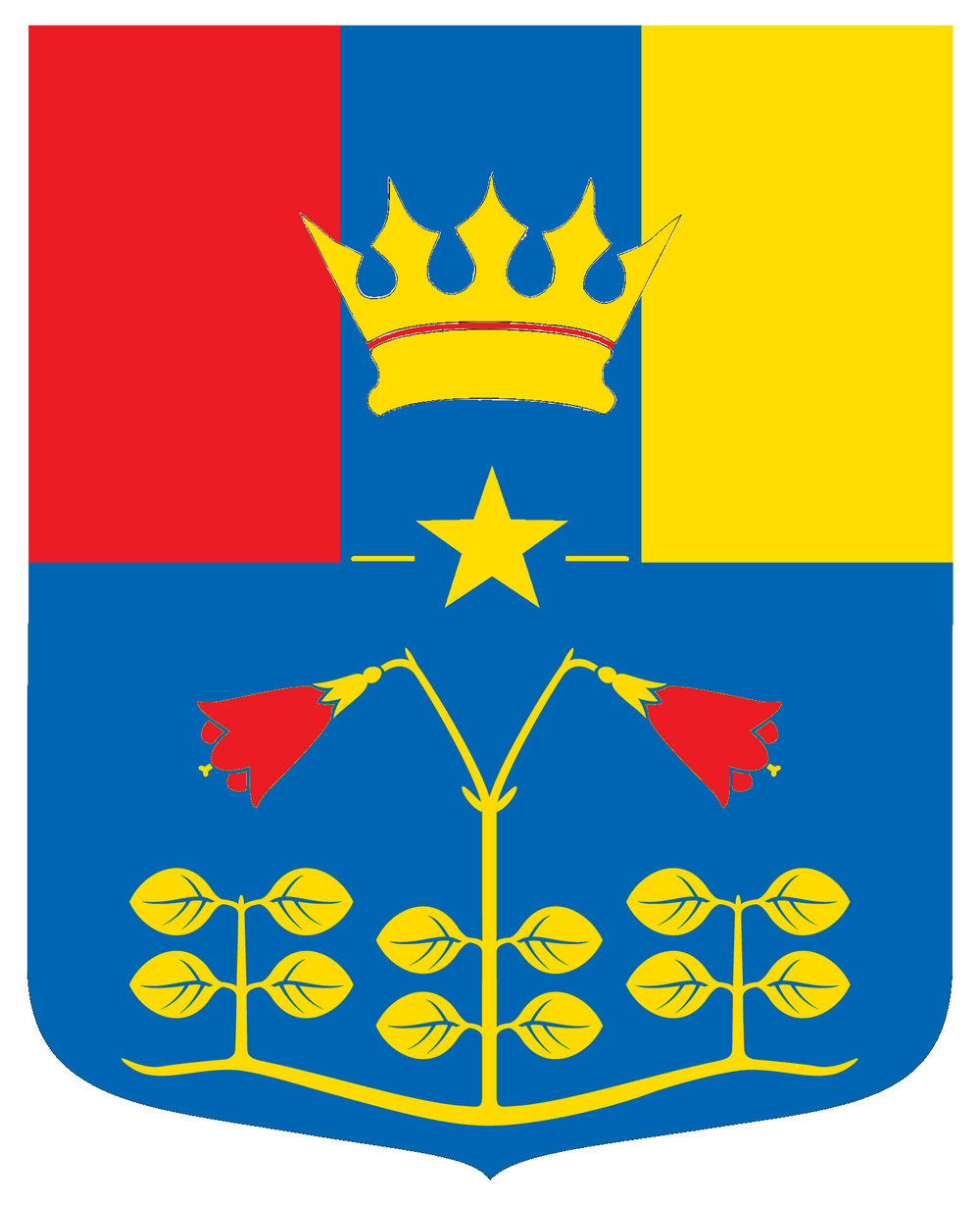
The Greater Seal of the Kingdom of Unixploria

The Greater Seal stands as one of the most revered national emblems in the realm’s cultural canon—a symbol that binds mythic antiquity, royal authority, and the kingdom's intellectual spirit into a single heraldic masterpiece. Its evolution mirrors the rise of Unixploria itself: from a constellation of early tribes to a unified monarchy defined by scholarship, exploration, and ceremonial grandeur.


Origins: The Proto‑Heraldic Era (ca. 50–200 AD)

The earliest precursors to the Greater Seal emerged during the Age of the Saga Kings, when rulers began adopting symbolic motifs to represent their reigns. These proto‑heraldic devices were not yet unified into a national seal but appeared on banners, carved stones, and ceremonial regalia.


Three motifs dominated this early period:


  • Starweaver Sigil— derived from King Björn Starweaver’s celestial charts.

  • Wolfguard Crest— associated with King Eirik Wolfborn and his elite defenders.

  • Dreamspeaker Glyph— tied to the prophetic visions of King Ragnvald Dreamspeaker.


These symbols were used independently, representing royal authority rather than national identity. Their later fusion into a single heraldic system marks the beginning of the Greater Seal’s conceptual formation.


The First Unified Seal: The Age of Codification (ca. 300–450 AD)

Unixploria’s growing administrative complexity demanded a standardized emblem. Queen Ingrid Dreamweaver, famed for her artistic renaissance, commissioned the Royal Atelier of Heraldry to create a unified symbol for royal decrees, treaties, and archival documents.


This first seal featured:


  • A single shield divided into three vertical fields—blue, red, and gold—representing cosmic knowledge, martial valor, and prosperity.

  • A simplified cross‑form sigil in each field, echoing the earlier Starweaver, Wolfguard, and Dreamspeaker motifs.

  • A rudimentary crown above the shield, symbolizing divine mandate.


While modest compared to later iterations, this seal established the tripartite color scheme and symbolic triad that remain central to the Greater Seal today.


Ceremonial Expansion: The High Heraldic Period (ca. 450–900 AD)

As Unixploria’s monarchy grew in prestige, so too did the grandeur of its heraldry. The High Heraldic Period saw the seal evolve from a simple administrative mark into a ceremonial emblem used in coronations, diplomatic missions, and royal proclamations.


Key innovations included:


  • Crowned Lions as supporters, introduced under Queen Liv Starlit. These lions symbolized vigilance, cosmic guardianship, and the monarchy’s protective role.

  • The addition of a mantle of state, draped in red and white with gold trim, representing royal dignity and the sanctity of governance.

  • A more elaborate crown, adorned with jewels and topped with a golden cross, reflecting the kingdom’s growing wealth and spiritual authority.


By the reign of King Sigurd the Boundless (ca. 500 AD), the seal had become a fully developed heraldic achievement recognizable to modern viewers.


Intellectual Refinement: The Golden Age (1200–1500 AD)

During the Monarchs of the Golden Age, the seal underwent its most significant intellectual reinterpretation. As the kingdom embraced enlightenment, scholarship, and economic expansion, the seal was redesigned to reflect these values.


Symbolic Revisions


  • The cross‑like sigils were refined into more geometric, almost runic forms, representing the fusion of tradition and emerging scientific thought.

  • The shield’s colors were standardized to precise heraldic hues:


    • Azure for cosmic inquiry

    • Gules for courage and sovereignty

    • Or for prosperity and enlightenment


Ceremonial Enhancements


  • Queen Astrid Goldflow introduced the Golden Ledger Knot, a decorative cord tying the mantle, symbolizing economic stability.

  • King Torvald Forgeborn commissioned artisans to emboss the lions with subtle metallic detailing, emphasizing craftsmanship.


Administrative Use

The seal became mandatory on:


  • Royal edicts

  • Diplomatic treaties

  • Academic charters

  • Merchant guild licenses


This widespread use cemented the seal as a national symbol rather than merely a royal one.


The Modern Seal: Standardization and National Identity (1500–Present)

The contemporary Greater Seal, as depicted in your uploaded image, represents the culmination of centuries of refinement. Its modern form was standardized in the Era of National Consolidation (ca. 1600–1700)and reaffirmed during the Unixplorian Cultural Revival (19th century).


Core Elements of the Modern Seal


  • Tri‑field shield with stylized sigils

  • Twin crowned lions as supporters

  • Grand royal crown with cross finial

  • Red‑and‑white mantle with gold trim

  • Golden cords and tassels symbolizing unity and continuity


Symbolic Interpretation Today


  • The seal embodies royal legitimacy, historical continuity, and the intellectual mission of Unixploria.

  • It appears on national monuments, academic diplomas, passports, and ceremonial regalia.

  • It is considered one of the most intricate heraldic achievements in the kingdom’s visual tradition.


Cultural Significance in Unixploria


The Greater Seal is more than heraldry—it is a cultural anchor.


  • It reinforces the kingdom’s identity as a realm of scholar‑kings, explorers, and guardians of knowledge.

  • It serves as a visual narrative of Unixploria’s mythic past and enlightened present.

  • It is central to national ceremonies, including coronations, academic inaugurations, and diplomatic receptions.


The seal’s presence in public life ensures that every citizen, scholar, and visitor encounters the symbolic legacy of Unixploria’s storied monarchy.


A full heraldic analysis of the Greater Seal of the Kingdom of Unixploria


1. The Escutcheon (Shield)

The shield is tierced in pale—divided vertically into three equal fields:


  • Dexter (left): Azure charged with a golden cross‑form sigil

  • Fess (center): Gules charged with a red cross‑form sigil

  • Sinister (right): Or charged with a red cross‑form sigil


These sigils are stylized, geometric cross‑forms unique to Unixplorian heraldry. Their placement in each field indicates a tripartite constitutional balance: cosmic inquiry (Azure), sovereign courage (Gules), and enlightened prosperity (Or).


2. The Charges

The cross‑forms are not Christian crosses but Unixplorian runic‑crosses, representing:


  • Cosmic Mandate— the kingdom’s ancient belief in celestial legitimacy

  • Royal Valor— the martial and moral courage of the crown

  • Golden Enlightenment— the intellectual and economic flourishing of the nation


Their stylization suggests a fusion of runic geometry and early medieval sigillography.


3. The Supporters

Two crowned lions Or, rampant guardant, flank the shield.


Heraldic meaning:

  • Rampant— active guardianship

  • Guardant— vigilance toward the viewer

  • Crowned— royal authority delegated to protective forces


Unixplorian meaning:

  • The lions represent the Twin Guardians of the Realm, mythic beasts said to watch over the kingdom’s borders and archives.

  • Their crowns indicate that protection is a royal duty, not merely a martial one.


4. The Crest

Above the shield rests a closed royal crown, richly jeweled and topped with a golden cross.


Heraldic meaning:

  • A closed crown signifies a sovereign, independent monarchy.

  • The cross finial symbolizes divine sanction.


Unixplorian meaning:

  • The crown is the Crown of Astrid Goldflow, a historic regalia piece associated with the Golden Age of scholarship.

  • Its placement above the shield asserts the monarchy’s supremacy over all national institutions.


5. The Mantling

The entire achievement is enveloped in a mantle of estate, gules doubled argent, trimmed Or, tied with golden cords.


Heraldic meaning:

  • Mantling traditionally protects the helm from heat; in royal achievements, it becomes a ceremonial cloth of dignity.

  • Red and white are common royal colors, but the gold trim elevates it to sovereign status.


Unixplorian meaning:

  • The mantle symbolizes the Sanctuary of Governance, the idea that royal authority shelters the kingdom’s cultural and intellectual life.

  • The golden cords represent the Golden Ledger Knot, a symbol of economic stability and administrative unity.


Symbolic Interpretation: Unixplorian Cultural Canon The Tri‑Field Shield

The three fields represent the Three Pillars of Unixploria:


  • Azure — The Celestial Pillar: The kingdom’s ancient astronomical traditions and its belief that knowledge is a divine pursuit.

  • Gules — The Sovereign Pillar: The courage of the monarch and the unity of the people under royal leadership.

  • Or — The Enlightened Pillar: Prosperity, scholarship, and the flourishing of arts and sciences.


The Lions

The crowned lions embody:

  • Guardianship of Knowledge

  • Protection of the Realm

  • Royal Vigilance


Their mirrored posture reinforces the idea of balanced protection—east and west, past and future.


The Crown

The crown’s ornate design signals:

  • Unbroken royal lineage

  • Divine legitimacy

  • Cultural wealth


Its cross finial ties the monarchy to the kingdom’s spiritual traditions without implying religious dominance.


The Mantle

The mantle elevates the seal from mere heraldry to state regalia, used only for:

  • Coronations

  • Diplomatic treaties

  • Academic charters

  • National ceremonies


It is the visual declaration of sovereign dignity.


Blazon (Formal Heraldic Description)

A complete blazon of the Greater Seal:

Tierced in pale Azure, Gules, and Or, each charged with a stylized cross‑form of appropriate tincture; supported by two lions Or, crowned and rampant guardant; ensigned with a closed royal crown proper; all within a mantle gules doubled argent, trimmed Or and tied with golden cords.


Heraldic Classification

The Greater Seal qualifies as a full royal heraldic achievement, containing:


  • Escutcheon

  • Charges

  • Supporters

  • Crest

  • Mantling

  • External ornaments


It is not a simple coat of arms but a complete ceremonial emblem.

Nature is sacred to Unixplorians

That's why we treasure the national tree, fish, mammal, bird, and flower—each a living symbol of the nation's soul and spirit.


Nature holds a sacred place in Unixplorian culture because it embodies the kingdom's deepest philosophical, spiritual, and cultural values. Their reverence for the natural world is woven into nearly every aspect of their identity—from mythology to politics to tourism. Here's why it matters so profoundly:


Philosophical and Mythological Foundations

  • Cyclical worldview: Unixplorians embrace impermanence and transformation, inspired by mythological figures like Ælvindar and the Sun-Moon Twins. These symbols reflect nature’s cycles—birth, decay, renewal—and encourage individuals to adapt while honoring their roots.
  • Mythic guardianship: Lady Unixploria, a symbolic figure, represents wisdom, curiosity, and exploration. She’s portrayed as a guardian of knowledge and natural beauty, reinforcing the sacredness of the land.


Environmental Stewardship

  • Legislative protection: Unixploria believes in environmental regulation to safeguard nature and its resources, even within a free-market framework.
  • Green values: The political landscape is focused on sustainability, equity, and ecological justice.


Cultural and Touristic Ethos

  • Tourism with purpose: The Unixplorian Tourist Board promotes nature not just as scenery but as a living archive of meaning. Visitors are encouraged to engage with landscapes as sacred sites, not just destinations.
  • Preservation and education: Through curated experiences, lectures, and festivals, Unixplorians cultivate a profound appreciation for their natural heritage and its role in shaping their identity.


A Nation of Wonder

Unixploria was founded as a response to modern detachment and digital overload. Its creators—philosophers, historians, and dreamers—sought to build a realm where nature, tradition, and curiosity reign supreme. In this light, nature isn't just beautiful—it's a source of wisdom, a mirror of the soul, and a sacred space for reflection and renewal.


>> The National Tree
In Unixploria, the national tree stands as a quiet sentinel of time—rooted in tradition, reaching toward possibility. It reminds us that true strength is patient and that growth often begins in silence. Its presence is a call to remember our heritage, to honor the natural world, and to stand tall even when the winds of change blow strong.


>> The National Fish
Gliding through the clear waters of Unixploria's lakes and rivers, the national fish embodies curiosity and grace. It moves with purpose, navigating the depths with quiet confidence. In its journey, we see the spirit of exploration and the joy of discovery—values that run deep in Unixplorian culture.


>> The National Mammal
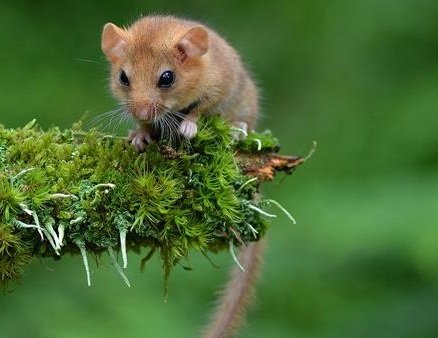
The national mammal, ever watchful and attuned to its surroundings, reflects the heart of Unixploria's wilderness. It teaches us to move through life with intention, to listen more than we speak, and to find dignity in harmony. Agile and wise, it is a symbol of coexistence and the quiet power of presence.


>> The National Bird
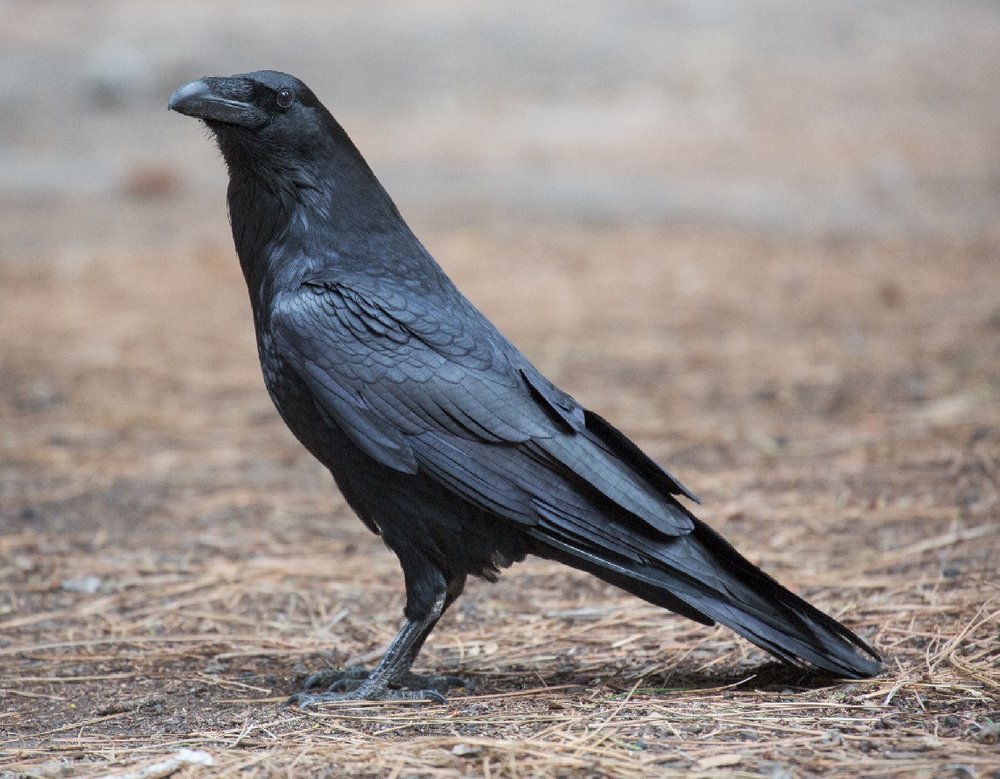
Soaring above the forests and fields, the national bird is a messenger of freedom and a symbol of perspective. Its flight is a reminder that vision must rise above the moment—that clarity often comes from distance. With each wingbeat, it carries the hopes of a nation that dares to dream beyond its borders, yet remains deeply rooted in its values.


>> The National Flower
Delicate yet enduring, the national flower of Unixploria blooms with quiet brilliance. It is a symbol of beauty born from simplicity, of resilience wrapped in elegance. Its petals whisper stories of renewal and grace, reminding us that even the smallest bloom can brighten the path ahead.


Together, these five emblems form a living tapestry of Unixploria's identity—each one a reflection of the nation's soul, each one a reminder that greatness is often found in the gentle, the curious, the rooted, and the free.

Captain Unix and Rune

In the heart of Unixploria, where wisdom reigns and valor stands unshaken, a hero rises—Captain Unix, the Sentinel of Knowledge and Guardian of Justice. Clad in colors as bold as his spirit—golden yellow for wisdom, deep blue for loyalty, and fiery red for courage—he stands as a beacon of hope, ready to defend his kingdom with intellect and strength.


By his side, ever steadfast, is his loyal companion—Rune, the golden retriever whose keen instincts and unwavering devotion make him more than just a friend. Rune wears a necklace marked with the letter "U," a symbol of the unity and strength they bring to Unixploria. Where Captain Unix strategizes, Rune senses the unspoken; where Captain Unix inspires, Rune comforts. Together, they are an unstoppable force, safeguarding the land and its people from ignorance and injustice.


Whether wielding a mighty sword or the boundless knowledge contained in his treasured book, Captain Unix leads with wisdom and honor. Rune, ever faithful, ensures that even in the darkest moments, the light of loyalty and courage never fades.


When Unixploria calls, they answer. When challenges arise, they stand firm. For in this kingdom built upon intellect and integrity, Captain Unix and Rune are the guardians of its future—the protectors of knowledge, defenders of truth, and champions of all who seek the light.